(artist blurb here)
Lifeboat: The Wreck of the Invisible Hand
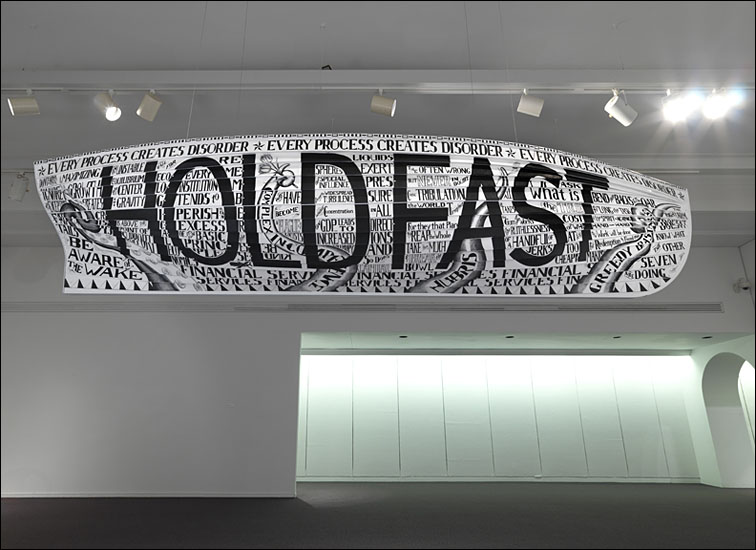
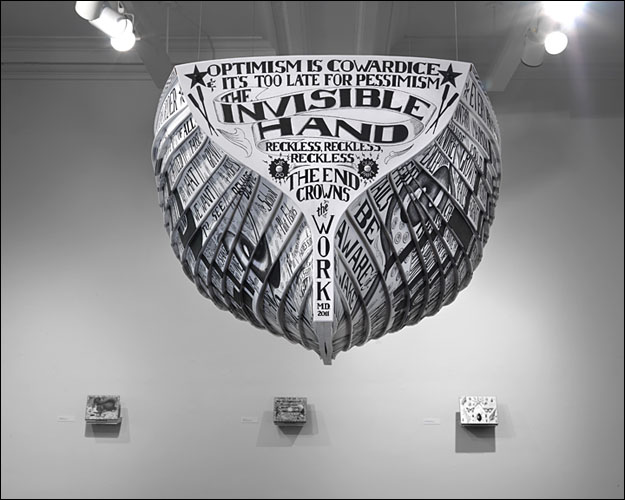
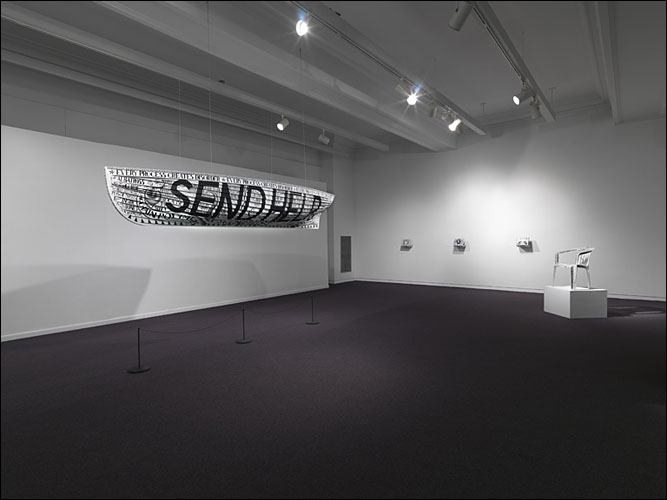
Michael Dinges' public project for Pulse is a full-sized "lifeboat" fabricated by the artist out of vinyl siding and engraved on its exterior with images and text exploring the intertwined stories of labor, consumerism and the environment. Dinges employs the maritime practice of scrimshaw — originally the engraving of whale bones or teeth —, which originated on whaling ships in the mid-1700s.
In her essay for Artifacts of the Recent Present, at the Chicago Cultural Center, Joanna Goebels explains... , "Underwater" is a neologism—referring to the state of owing more on one's home than its current market value—arising in the wake of the collapse of the housing bubble in the late 2000s. Not coincidentally, "underwater" is what one might feel when confronted by Michael Dinges' Lifeboat: The Wreck of the Invisible Hand, a full-sized replica of a whaling boat fabricated of vinyl home siding and engraved with images and text exploring the intertwined stories of labor, consumerism and the environment, and the political and social fallout resulting from the excesses of globalization. The orientation of Lifeboat to the viewer is such that, were the boat afloat in water, the onlooker's head would be just above the water line.
With Lifeboat, Dinges combines the form of a whaling boat with his own adaptation of scrimshaw to trace the timeline of our consumerist tendencies and attendant environmental destruction back to the original global workers—whalers. Working at the dawn of the industrial revolution to meet an ever-increasing demand for fuel in the form of whale oil, they destroyed the very source of their livelihood, hunting whales nearly to extinction and altering the ocean ecosystem. The scrimshaw art they made on their journeys using whale bones—the waste product of the whaling industry—often included poetry, and transformed refuse into beautiful, even valuable objects that outlived their makers.